
toqus
Picture Dictionary
English
한국어
Login
Register
🔍
efficient
adjective
working
well
and
quickly
without
wasting
time
,
energy
,
or
materials
•
Sarah
is
an
efficient
worker
who
finishes
her
tasks
early
every
day
.
Sarah
is
an
efficient
worker
who
finishes
her
tasks
early
every
day
.
•
The
new
filing
system
is
so
efficient
that
everyone
can
find
documents
in
seconds
.
The
new
filing
system
is
so
efficient
that
everyone
can
find
documents
in
seconds
.
From
Latin
efficere
“
to
accomplish
,
bring
about
”
+
English
adjective
suffix
–ent
.
adjective
(
of
a
machine
,
system
,
or
process
)
using
as
little
energy
,
fuel
,
or
materials
as
possible
while
still
working
well
•
LED
bulbs
are
more
efficient
than
traditional
incandescent
ones
.
LED
bulbs
are
more
efficient
than
traditional
incandescent
ones
.
•
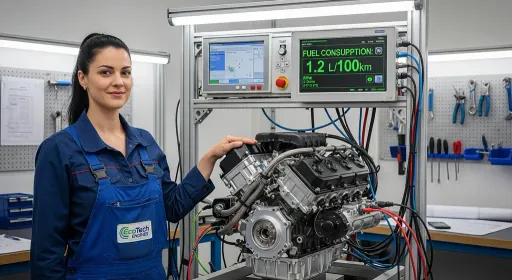
The
engineer
designed
an
efficient
engine
that
consumes
less
fuel
.
The
engineer
designed
an
efficient
engine
that
consumes
less
fuel
.
Same
origin
as
Sense
1
,
applied
to
technology
from
early
19th-century
industrial
engineering
.
efficiently
adverb
in
a
way
that
achieves
much
with
little
waste
of
time
,
effort
,
or
resources
.
•
The
new
vacuum
cleans
the
carpet
efficiently
.
The
new
vacuum
cleans
the
carpet
efficiently
.
•
He
solved
the
puzzle
efficiently
using
a
smart
strategy
.
He
solved
the
puzzle
efficiently
using
a
smart
strategy
.
From
the
adjective
'efficient'
+
'-ly'
;
'efficient'
derives
from
Latin
'efficientem'
(
nominative
efficiēns
),
present
participle
of
'efficientre'
(
'to
accomplish'
),
from
'ex-'
(
'out'
)
+
'facere'
(
'to
do
,
make'
).
coefficient
noun
a
number
that
is
multiplied
by
a
variable
in
an
algebraic
expression
,
such
as
the
3
in
3x
•
In
the
equation
4x
+
7
,
the
number
4
is
the
coefficient
of
x
.
In
the
equation
4x
+
7
,
the
number
4
is
the
coefficient
of
x
.
•
The
teacher
asked
Maya
to
divide
each
term
by
its
coefficient
.
The
teacher
asked
Maya
to
divide
each
term
by
its
coefficient
.
Mid-18th
century
:
from
co-
‘
jointly
’
+
efficient
,
originally
in
the
sense
‘
accomplishing
,
producing
’.
noun
a
measured
number
that
shows
how
strongly
or
how
much
one
thing
influences
or
relates
to
another
,
such
as
the
coefficient
of
friction
or
a
correlation
coefficient
•
Winter
tyres
grip
better
because
rubber
with
a
higher
coefficient
of
friction
sticks
to
the
road
.
Winter
tyres
grip
better
because
rubber
with
a
higher
coefficient
of
friction
sticks
to
the
road
.
•
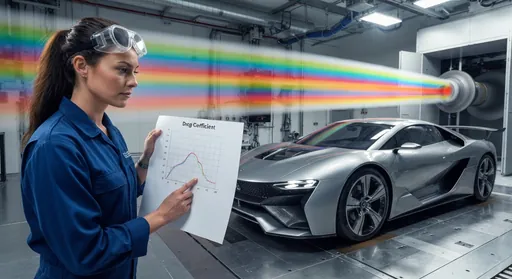
Engineers
calculated
the
drag
coefficient
to
design
a
faster
car
.
Engineers
calculated
the
drag
coefficient
to
design
a
faster
car
.
Mid-18th
century
:
from
co-
‘
jointly
’
+
efficient
,
referring
to
quantities
that
work
together
.